EN
EN


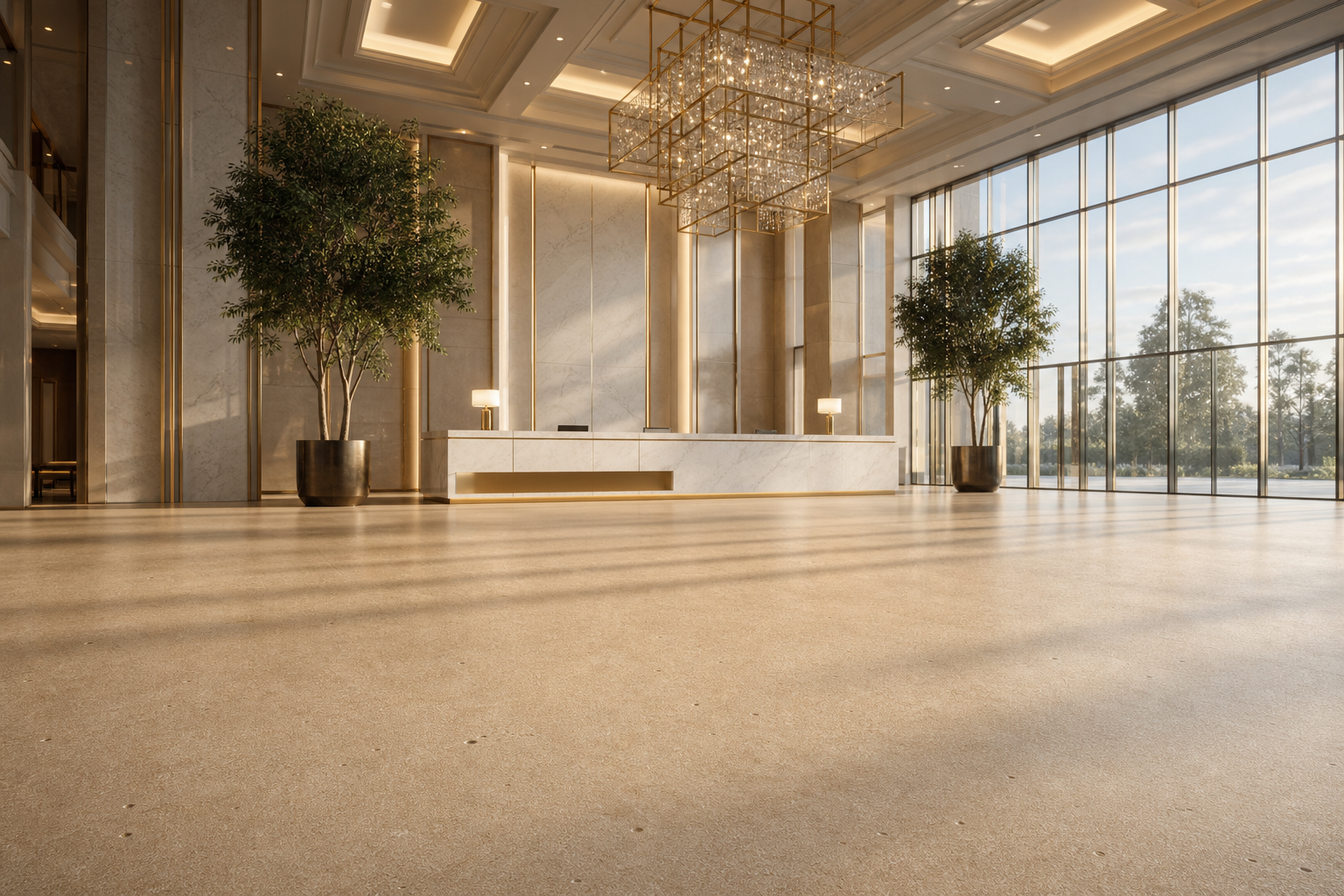
Contemporary commercial spaces are increasingly moving toward quieter, more natural material palettes.
Instead of dramatic veining or strong visual contrast, many designers are choosing surfaces with softer colors, subtle mineral variation and a more understated sense of texture. Limestone fits naturally into this direction.
Its appeal does not come from bold patterns. It comes from fine particles, gentle tonal shifts and the slightly weathered character formed over time. These qualities allow limestone to blend naturally into hotels, public areas, leisure spaces and other architectural environments without dominating the overall design.
For projects inspired by natural, resort or minimalist aesthetics, this quieter material language can help create spaces that feel warm, relaxed and visually balanced.
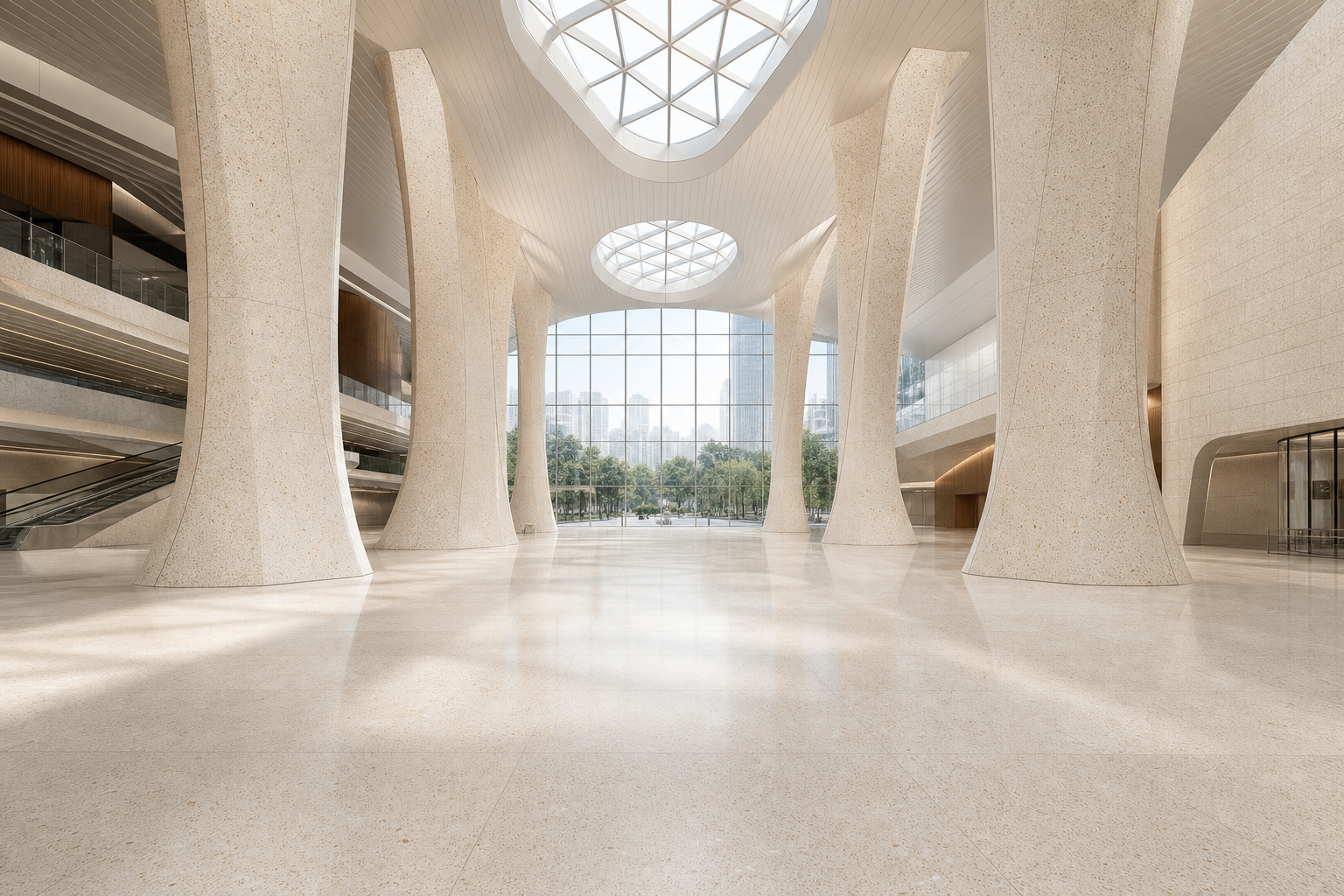
Compared with marble surfaces defined by strong veining, limestone usually has a more restrained appearance.
Soft beige, greige and warm grey tones create a calm base, while small particles and irregular tonal changes add texture without making the surface visually busy.
This balance is especially valuable in larger spaces.
Rather than becoming the main visual feature, the material works together with lighting, furniture, landscaping and architectural forms to support the overall atmosphere of the project.
That is why limestone-inspired surfaces are increasingly relevant in hotels, commercial public areas, showrooms, cultural spaces and other projects where designers want materials to feel natural without being overly decorative.
The natural variation that makes stone attractive can also make it more difficult to control across large projects.
Natural limestone is influenced by geological conditions, which means color, particle distribution and surface character can vary from one block or batch to another.
For smaller applications, this variation may become part of the material's appeal. For large commercial projects, however, noticeable differences between installation areas can make it more difficult to maintain the intended visual continuity.
It can also be challenging to source large quantities of natural limestone with closely matched color and texture.
The design challenge, therefore, is not to eliminate variation completely. It is to retain the natural character of limestone while keeping color and texture within a more controllable range.
RUNPIN's Limestone Series was developed around this idea.
Rather than simply reproducing natural limestone, the collection focuses on several of its most recognizable visual characteristics: soft base colors, fine particles, subtle mottling and gently weathered tonal variation.
A multi-color compression process allows individual slabs to retain small differences in depth and tone, helping the surface avoid an overly uniform or artificial appearance.
At the same time, production using a Breton vacuum high-pressure forming line helps improve consistency between slabs and batches, making the material easier to coordinate across larger installation areas.
The result is a limestone-inspired terrazzo surface designed to preserve the visual softness of natural stone while giving architects and project teams greater control over the overall appearance.
The collection is also designed for both indoor and outdoor applications, allowing the same material language to continue across different areas of a project.

Nile Yellow is one of the designs within RUNPIN's Limestone Series.
Its appearance draws inspiration from coastal sand and stone under warm natural light.
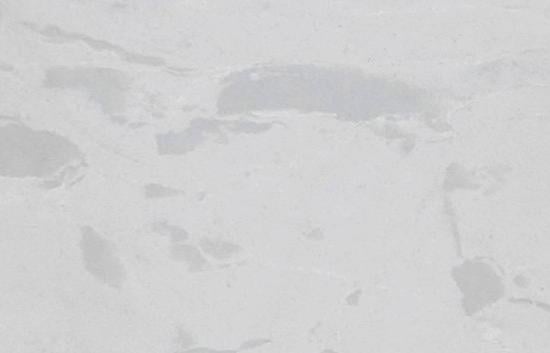
A soft greige base carries a subtle warm undertone, while grey, brown and darker particles are distributed throughout the surface. Two closely related base tones blend gradually rather than forming strong visual boundaries.
From a distance, the material appears calm and balanced. At closer range, fine particles and subtle tonal differences become more visible, adding depth without creating a highly patterned surface.
This balance makes Nile Yellow particularly suitable for projects where designers want a warm neutral material that can be used across larger surfaces without creating visual pressure.
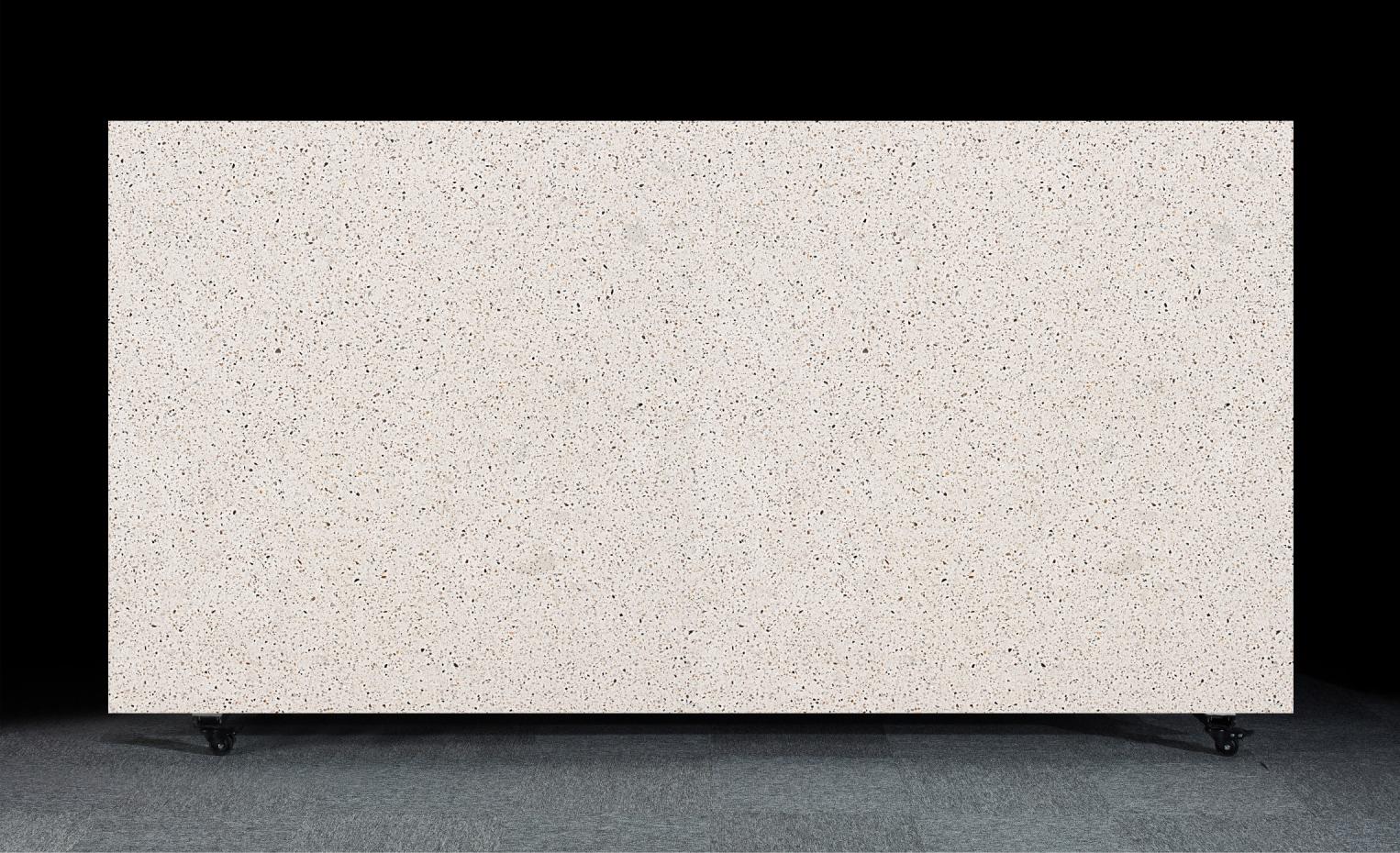
Because of its restrained color palette and fine texture, Nile Yellow can work across a wide range of architectural and commercial settings.
Potential applications include hotel lobbies, commercial public areas, showrooms, wall and floor surfaces, courtyards and semi-outdoor spaces.
The material can also help connect different zones within a project. When the same visual language is carried from interior public areas into transitional or semi-outdoor spaces, it can create a more continuous overall design.
Nile Yellow has also been applied in the Shenzhen Uniworld Outlets project, where its warm neutral base and fine particle structure contribute to a natural and coordinated spatial environment.
The goal of a nature-inspired material does not have to be perfect imitation.
For architects and designers, the more useful question is whether a material can retain the visual qualities that make natural stone appealing while reducing some of the uncertainty associated with large-scale applications.
Limestone-inspired terrazzo offers one approach.
By combining soft colors, controlled variation and a natural-looking surface structure, RUNPIN's Limestone Series provides another option for projects that want the character of limestone with greater consistency across larger spaces.
Rather than trying to make an engineered surface indistinguishable from natural stone, the focus is on preserving the qualities that make limestone visually appealing while making those qualities easier to apply in real architectural environments.