EN
EN


When sourcing engineered stone internationally, importers, distributors, and project buyers cannot rely on color, price, and dimensions alone. Product compliance, safety in use, indoor environmental requirements, quality management, and the specific requirements of the target market or project all factor into a sound purchasing decision.
Certifications and management-system credentials are one of the clearest ways to evaluate a supplier's compliance record and a product's suitability for a given application, but only when buyers understand what each one actually covers. This guide walks through the certifications and testing benchmarks most relevant to engineered stone buyers, and outlines how to verify them before placing an order.

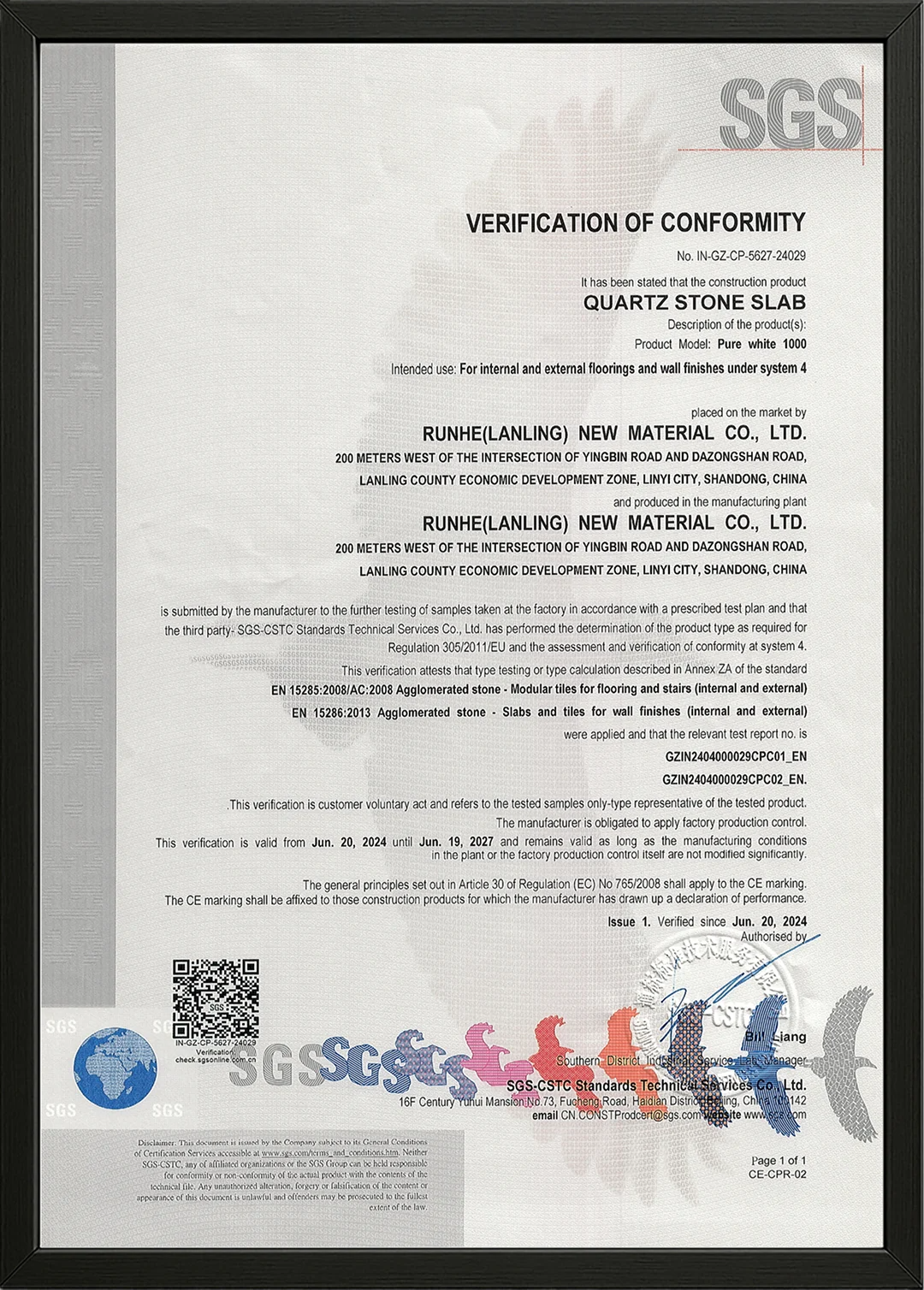
CE marking indicates that a product meets the applicable European Union requirements for health, safety, and environmental protection, allowing it to be placed on the European market. It is a regulatory declaration, not a general quality endorsement — a CE mark confirms that specific harmonized standards have been met for that product category, not that the product is superior to alternatives without one.
For engineered stone, whether CE marking applies, and u nder which standard, depends on the specific product and its intended use. Buyers should ask suppliers to confirm the exact product covered, the harmonized standard referenced, and the supporting Declaration of Performance. CE scope can differ meaningfully between product types — a CE mark obtained for one slab format or thickness does not automatically extend to another.
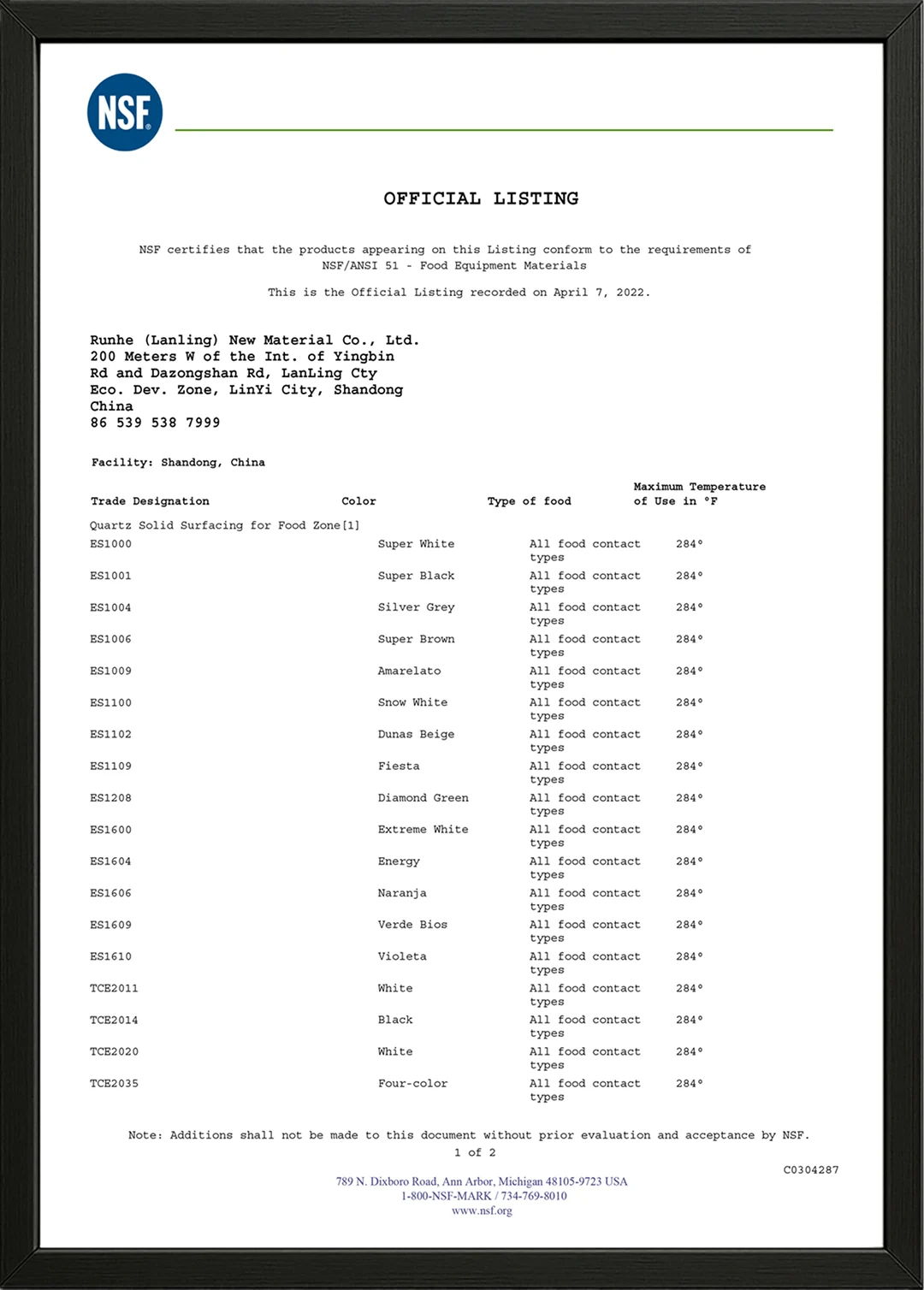
NSF certification focuses primarily on public health-related criteria, most commonly the safety of materials that may come into contact with food, water, or other sensitive uses. This is why buyers sourcing countertops or surfaces for food-service, healthcare, or similar applications pay particular attention to it.
Seeing the words “NSF Certified” on a product listing is not enough on its own. Buyers should verify which specific product the certification applies to, which NSF standard was used for testing, and what the certification scope actually covers. Requirements can vary from one product line or application to another, so confirming these details product by product is standard due diligence rather than an extra step.
GREENGUARD Gold certification evaluates chemical emissions from a product and its contribution to indoor air quality, rather than the product's mechanical or structural performance. It sets stricter emission limits than baseline GREENGUARD certification and accounts for exposure in sensitive environments.
This is why residential projects, commercial interiors, schools, and healthcare facilities frequently specify low-emission materials, and why GREENGUARD Gold is a useful reference point when buyers are screening surfaces for interior use. It should be understood specifically as an indicator of low chemical emissions and indoor environmental performance, not treated as a general-purpose quality certification covering durability or strength.
Beyond product-specific certifications, ISO management-system standards say something about how a manufacturer runs its operations:
The key distinction buyers should keep in mind is that ISO management-system certification is not the same as product performance certification. An ISO 9001 certificate reflects the rigor of a manufacturer's management systems; it does not, by itself, prove that a particular engineered stone slab meets a specific technical specification. The two types of credentials answer different questions and are best read together, not interchangeably.
Certifications establish a baseline, but they rarely capture every technical detail relevant to a specific project. Buyers evaluating engineered stone for a particular application should also request product-level test reports and technical parameters, including:
These figures let buyers compare products on the technical characteristics that matter most for their intended use — heavy-traffic flooring, outdoor applications, or large-format countertops each place different demands on the material — rather than relying on certification labels alone.
Before finalizing a purchase, buyers should confirm the following for any certification a supplier presents:
Checking these details against the specific product being purchased, rather than accepting a certification at face value, is the most reliable way to confirm that a credential actually applies to the order in question.
RUNPIN approaches certification and quality control as a layered system rather than a single label, covering three areas.
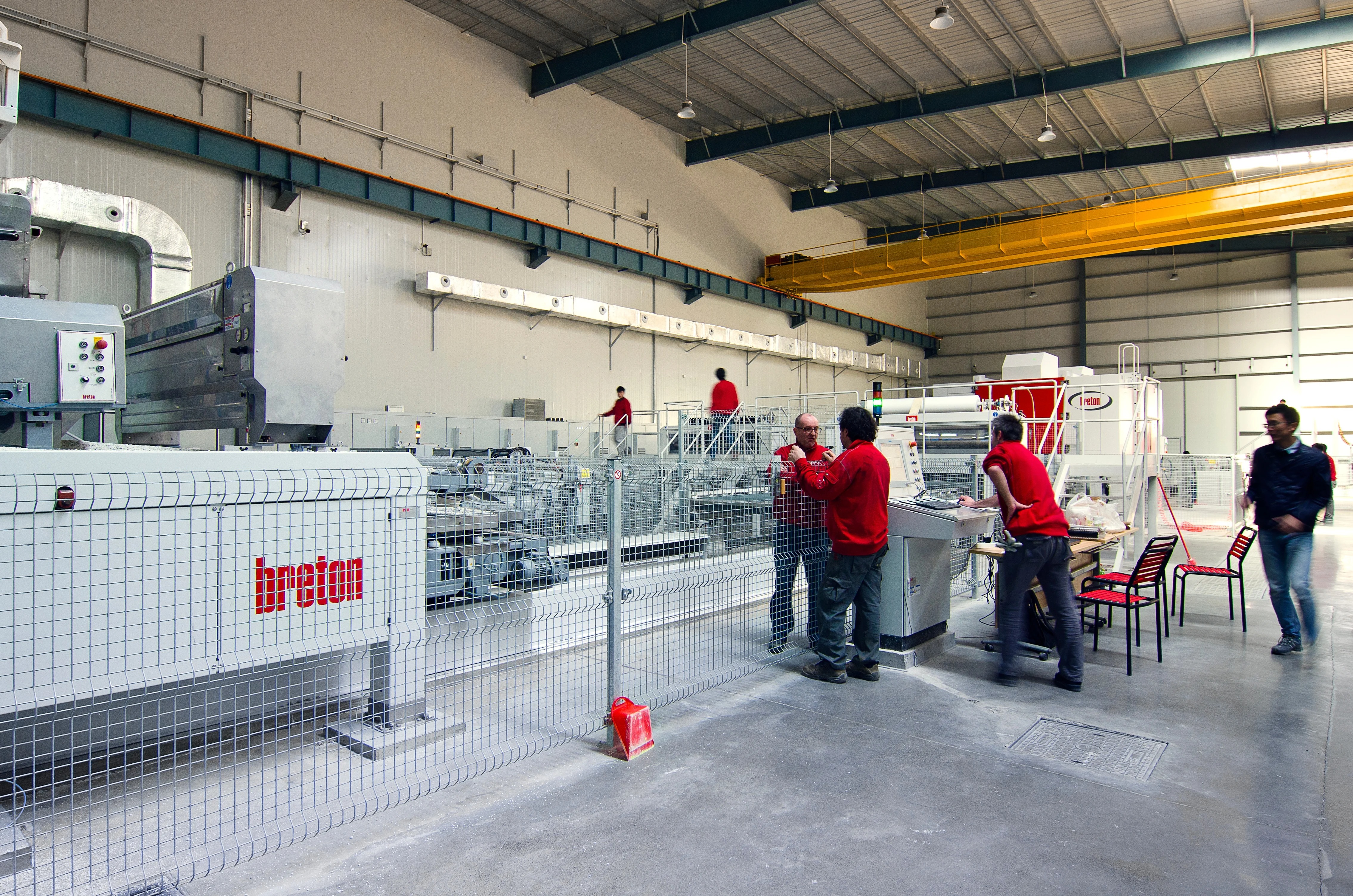
CE, NSF, and GREENGUARD Gold, applied according to the specific product and its intended market or use case.
ISO 9001, ISO 14001, and ISO 45001, governing quality, environmental, and occupational health and safety management across manufacturing operations.
SGS testing alongside internal quality checkpoints — IQC, IPQC, FQC, and OQC — applied at incoming materials, in-process production, final inspection, and outgoing shipment stages.
Certification and testing coverage may vary by product. Buyers should confirm the applicable certificates, standards, and test documentation for the specific product before purchasing.
Sourcing engineered stone on price and appearance alone leaves out much of what determines whether a product is actually fit for its intended market, project, and application. Certifications, testing reports, product performance data, manufacturing systems, and supplier capability together give buyers a fuller picture — and knowing what each certification does and does not cover is what turns a certificate into a useful sourcing tool rather than a checkbox.