EN
EN


As today's design trends continue to evolve, engineered stone countertops are quickly becoming one of the most important aspects of modern-day design, combining functionality, strength, aesthetics and innovative technology to provide consumers with the perfect solution for kitchens, bathrooms, and commercial spaces alike.
Since founding in 2018, RUNPIN has been at the forefront of this evolution, delivering advanced surface solutions through continuous research, sustainable practices, and high-quality manufacturing.
This guide will provide you with the information you need to know about engineered stone countertops, including what engineered stone countertops are, how they are made, the benefits and advantages, and how to choose the right engineered stone countertop for your project.
Engineered stone is a man-made material made from the combination of natural stone aggregates ( such as quartz, marble, as well as recycled materials) with resin and pigments. These materials will be mixed and formed under high pressure into strong, dense, non-porous slabs.
Engineered stone is manufactured, rather than quarried directly from nature like other natural stone products. The engineered stone manufacturing process is designed to create a product that performs at a higher level while still exhibiting the beauty of nature. This controlled manufacturing process ensures greater consistency in color, texture, and feel of the products.
RUNPIN offers engineered stone products including engineered quartz surfaces, terrazzo, resin marble and natural marble solutions. Each product line has been created to meet the needs of residential and commercial uses.
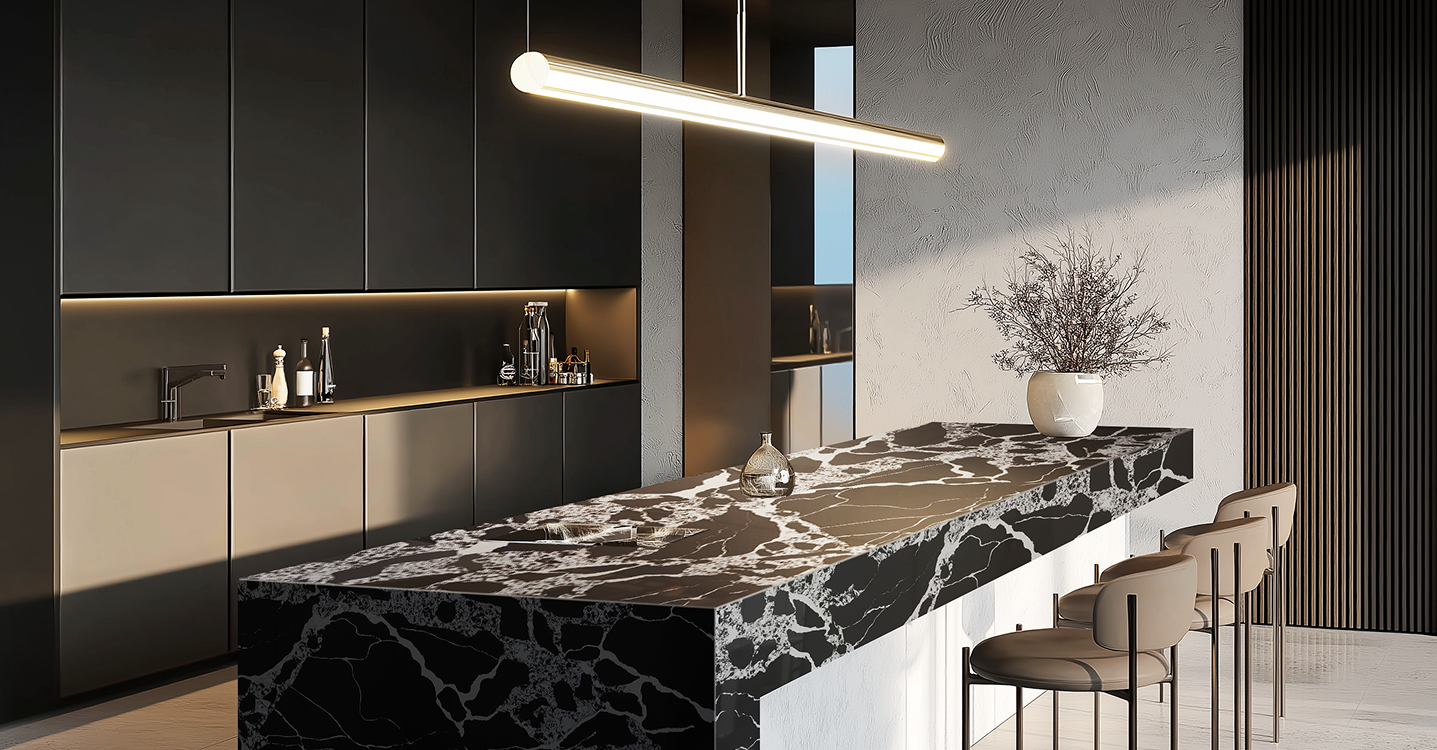
There are different types of engineered stones based on the needs for designing modern architecture and interior design.
Quartz countertops are one of the most popular examples of engineered stone. Constructed from over 90% of natural quartz crystals, they're extremely durable, highly scratch-resistant and non-porous.
Key benefits:
Exceptional hardness and durability
Stain, fungus and bacteria resistant
Available in a wide range of colors and patterns
Minimal maintenance required (do not require sealing)
Quartz surfaces are an excellent choice in kitchens, where cleanliness and durability are key components.
Terrazzo is made of a combination of chips of marble, quartz, glass, or other elements set in resin or cement.
Key benefits:
Ability to create a unique and completely customizable look
Sustainable material (contains recycled materials)
Extremely durable in high-traffic areas
Can be used as a countertop or floor
Terrazzo has a very distinct artistic appearance and can work well with both modern or classic styles.
Resin marble combines natural marble powder with resin to create a lightweight and durable product that can be a substitute for solid marble.
Key benefits:
Elegant marble appearance
Reduced the likelihood of cracking
Less expensive than natural marble
More easily installed than traditional solid marble
This option is ideal for projects that will utilize the luxury appearance of marble but do not want to deal with the upkeep of traditional marble.
While not engineered, natural marble remains an important part of RUNPIN’s product line.
Key benefits:
Timeless beauty and uniqueness
Natural veining patterns
Premium appearance compared to engineered stones
However, natural marble requires more maintenance compared to engineered alternatives.
Because of their perfect combination of performance, aesthetics and practicality, engineered stone countertops have become an increasingly popular choice in modern interior design.
Engineered stone countertops are designed to withstand daily use and abuse. The composition consists of natural stone aggregate bonded together with resin and manufactured using advanced methods, resulting in a denser, stronger material than many other natural stones. Therefore, it is much more scratch, chip, and crack-resistant than most other materials.
Engineered stone is non-porous, which means it will not absorb liquids. The absence of micro-pores makes it less prone to staining by coffee, red wine, or grease than many other materials (such as granite or marble). Also, because engineered stones do not have micro-pores, they are less conducive to the growth of bacteria, mold, or mildew, making them safe choices for kitchens or bathrooms.
Engineered stone countertops are very easy to care for. Compared to natural stone surfaces, which may need periodic sealant applications to keep out moisture, there is no need to periodically seal engineered surfaces. For daily cleaning, simply wipe with a damp cloth soaked in soapy water, or use a non-abrasive cleaner.
Because engineered stone is manufactured in a controlled environment, the colors and patterns of the stones will be highly consistent. This eliminates the unpredictability common in natural slate, enabling designers and architects to achieve precise visual effects. Engineered stone offers an extremely wide range of colors, textures, and surface finishes, making it a perfect match for a variety of interior design styles.
The manufacturing process for engineered stone countertops can be summarized by following the steps below:
Engineered stones consist primarily of natural aggregates (quartz, marble or granite), which must be sourced, mined and crushed into fine particles before being sent into the manufacturing process to create the foundation of the engineered stone countertop.
Once the natural aggregates have been crushed into fine particles, they are mixed together with polymer resins, coloring agents and other additives to finalize their color and pattern, and to determine the final properties of the engineered stone surface.
The blended material is poured into molds and formed into slabs. At this stage, manufacturers can control thickness, size, and surface design.
Slabs formed from the previous step are placed in a machine where they are subjected to high levels of vibration and vacuum pressure, assisting in creating a high-density and non-porous surface with enhanced strength.
After going through the indentation and compression verification processes, the slabs are placed in an industrial oven where a heated air environment cures the resins that hold all of the components together into a solid, durable surface.
Once hardened, the slabs are polished, honed, or textured to achieve the desired finish. Edges are cut and refined according to design specifications.
Each slab undergoes strict quality control checks to ensure consistency in color, pattern, thickness, and structural integrity before distribution.
RUNPIN’s advanced production facilities in Dongguan, Guangxi, and Shandong ensure strict quality control at every stage, resulting in surfaces that meet international standards.
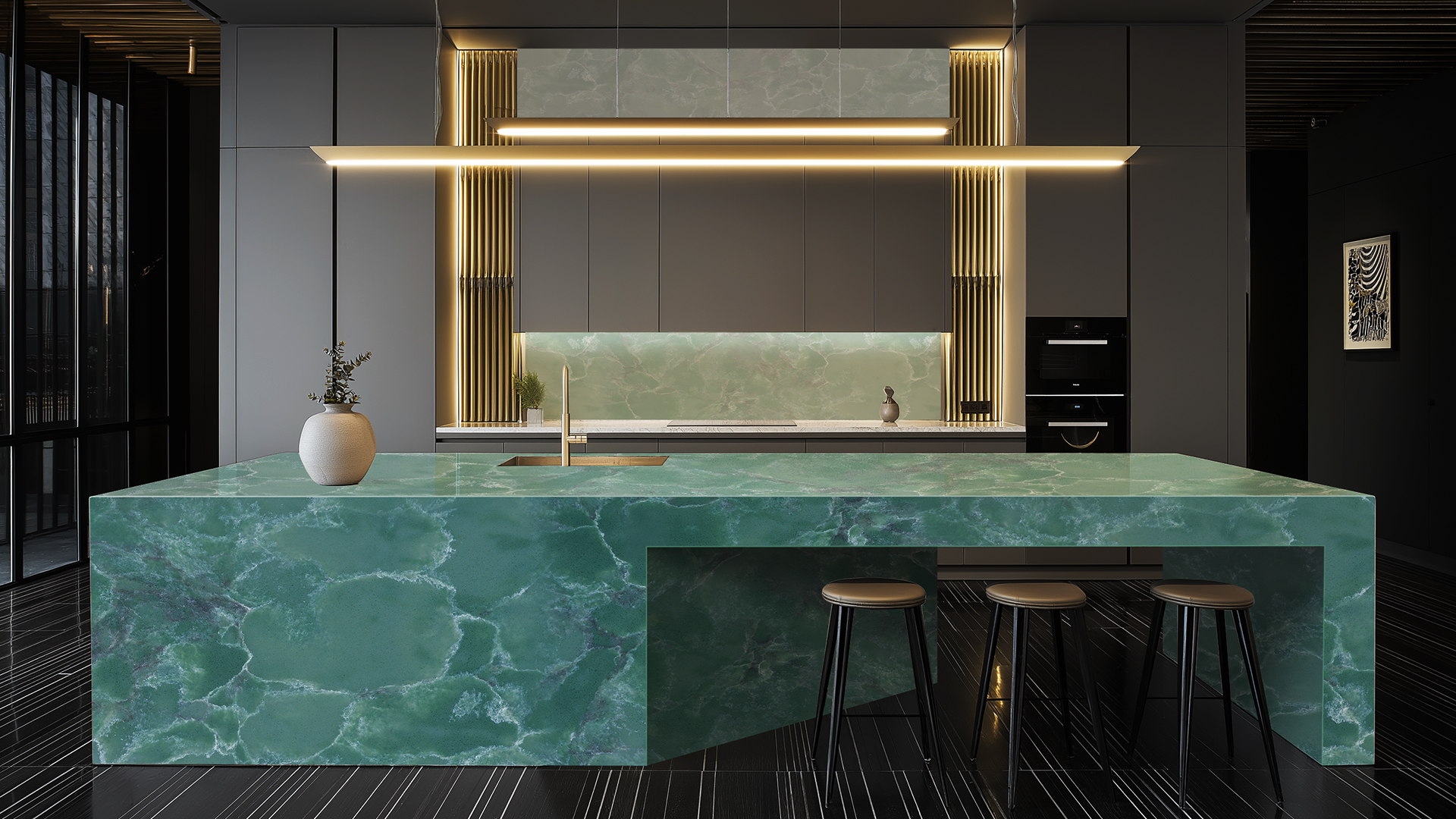
Selecting the right engineered stone countertop requires careful consideration of both functional needs and design preferences.
The first step is to determine the location and specific purpose of the countertop. For kitchen applications, you should prioritize durability, heat resistance and stain resistance. In bathroom environments, water resistance and hygiene are more important. For commercial spaces, due to the high frequency of use and continuous operation, there may be more stringent requirements for the durability of the countertop.
The choice of colors holds a crucial position in the overall aesthetics of a space. Neutral tones such as white, gray, and beige are widely used and can seamlessly blend with various interior designs ranging from modern minimalism to classical styles. On the other hand, bold patterns or textured surface designs can serve as visual focal points, adding unique personality and visual interest to the space.
The surface finish not only significantly affects the appearance of the countertop, but also has a significant impact on its functionality:
Polished: A glossy, reflective finish that enhances color depth and creates a luxurious, high-end look. It is commonly used in modern kitchens and commercial interiors.
Honed: A smooth, matte finish that offers a more subtle and natural appearance, reducing glare and fingerprints.
Textured: A more tactile surface that adds depth, grip, and character, often used in design-focused or rustic-style spaces.
Engineered stone slabs offer a variety of thickness specifications, typically ranging from standard thickness to high-end thickened options. You can choose based on your preferences and requirements. However, depending on the specific installation design, thicker panels may require additional structural support.
Budget is another crucial factor that cannot be ignored. Their price ranges are quite wide, from entry-level to high-end custom series. The specific pricing depends on factors such as quality, design complexity, board thickness, as well as the brand's position in the market and overall craftsmanship level.
As a wholly-owned subsidiary of China Resources Building Materials Tech, RUNPIN combines strong industry expertise with cutting-edge technology. Since 2018, the company has focused on delivering high-quality engineered stone solutions that meet the needs of modern construction and design.
With multiple production bases and a commitment to sustainability, RUNPIN ensures:
Consistent product quality
Advanced manufacturing capabilities
Innovative surface designs
Environmentally responsible practices
These strengths position RUNPIN as a reliable partner for projects of all sizes.
Engineered stone countertops represent the perfect fusion of natural beauty and modern engineering. Durability, low maintenance, and vast manufacturing processes and aesthetic applications have made them the most popular option on the market today for all residential and commercial surfaces.
Whether you are remodelling your kitchen, designing a luxury restroom, or developing a corporate facility, engineered stone will support all your performance and visual requirements.
By choosing a trusted manufacturer such as RUNPIN, you can get high-quality materials and ingenious designs. This ensures that your surfaces not only look exceptional but also stand the test of time.