EN
EN


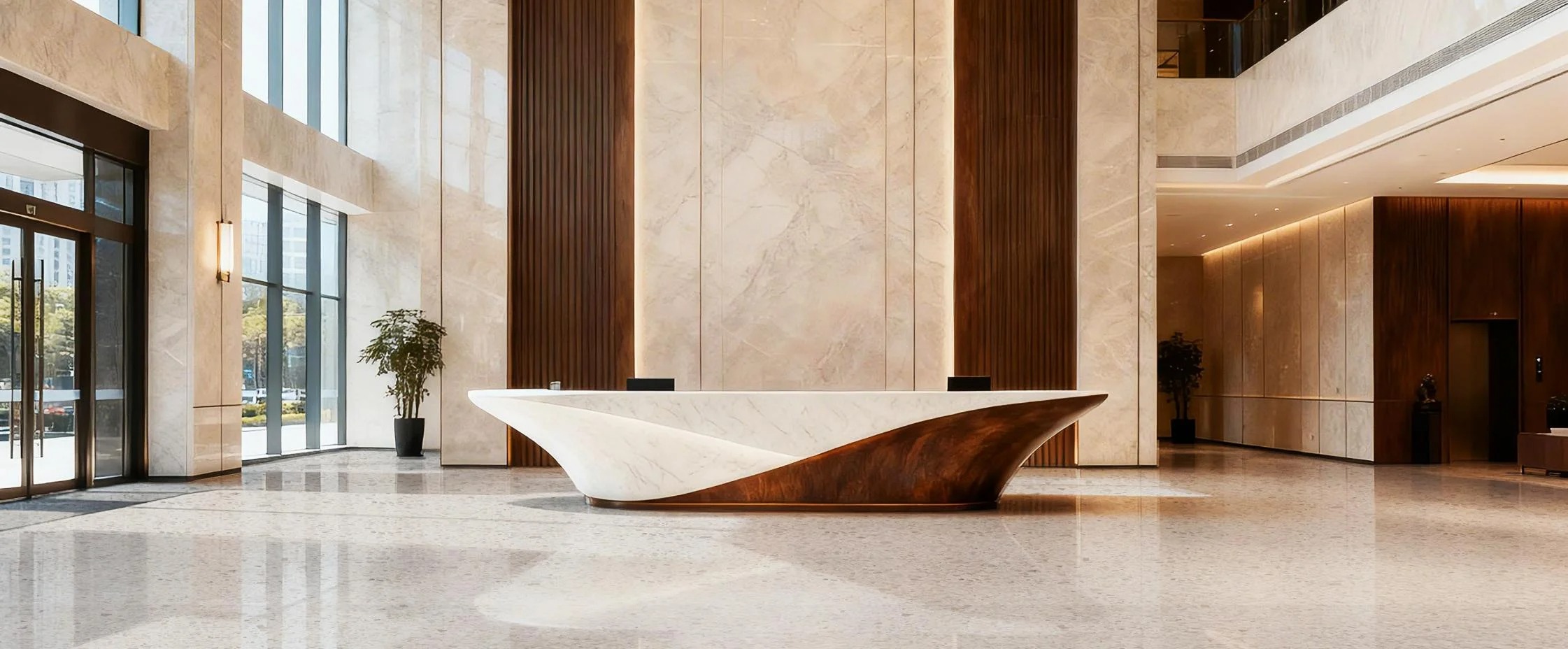
Terrazzo has moved well beyond its reputation as a mid-century flooring material found mostly in schools and government buildings. Architects specifying finishes for retail flagships, hospitality lobbies, healthcare facilities, and corporate offices are increasingly returning to terrazzo, this time in forms that are faster to install, easier to source internationally, and available in a far wider range of colors and aggregate combinations than earlier generations of terrazzo.
For architects and commercial buyers evaluating terrazzo for a project, the decision involves more than choosing a terrazzo color palette. Format, aggregate composition, installation method, and supplier capability all affect how a finished terrazzo floor performs and how smoothly the project comes together. This guide walks through what to consider when choosing terrazzo for a commercial project, from terrazzo material fundamentals to what to confirm with a terrazzo manufacturer before specifying a product.
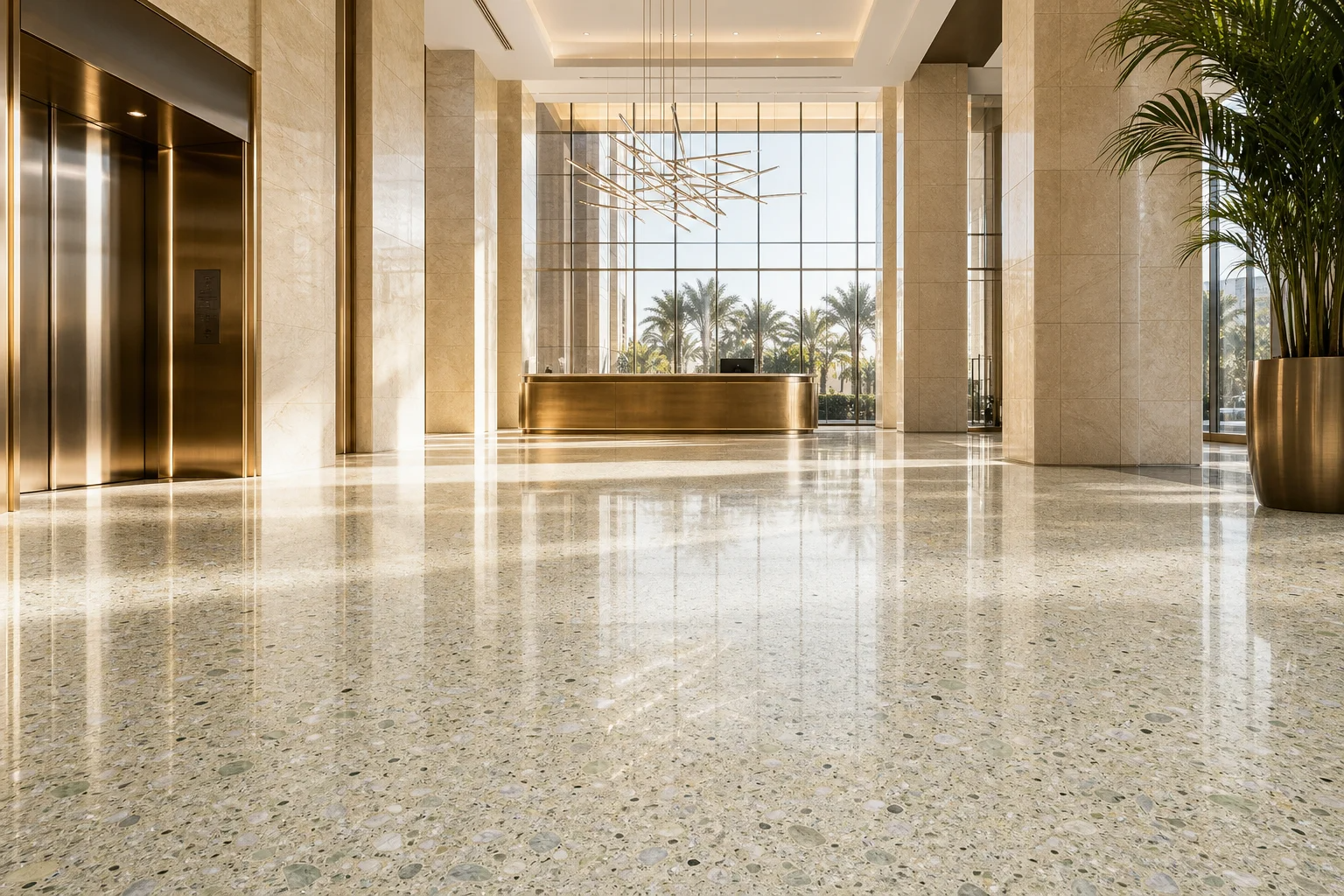
Terrazzo's core appeal in commercial settings comes down to durability and long-term appearance retention under heavy foot traffic. Terrazzo is composed of aggregate, traditionally marble or granite chips, though quartz, glass, and shell aggregates are now common in modern terrazzo, bound in a cement or resin matrix and ground to a smooth, level finish. This composite structure means terrazzo resists surface wear far better than many alternative flooring materials, since damage to any single aggregate particle does not compromise the surrounding terrazzo surface the way a scratch or chip can on a solid material.
Because the aggregate is embedded throughout terrazzo rather than applied as a surface coating, terrazzo does not show wear patterns the way laminate or vinyl flooring does over years of use in lobbies, corridors, and retail floors. This durability is part of why terrazzo remains a common specification in airports, transit stations, and other spaces where a commercial floor needs to perform for decades without a full terrazzo replacement cycle.
Commercial terrazzo is available in a considerably wider design range than its historical reputation suggests. Aggregate size, density, and material all affect the finished look of terrazzo, since fine, densely packed aggregate produces a more uniform, subtle terrazzo texture, while larger or sparser aggregate creates a more visually active terrazzo surface with more pronounced color variation.
Terrazzo color is controlled primarily through the binder, since cement-based terrazzo allows for pigmented cement in a range of base tones while resin-based terrazzo offers a wider and more consistent color range because resin takes pigment more predictably than cement, and through the terrazzo aggregate mix itself, which can combine multiple colors, materials, and particle sizes to create a custom terrazzo look tied to a project's design intent. Architects working on branded commercial environments, such as retail flagships or hospitality properties, often specify a custom terrazzo aggregate blend developed specifically for that project rather than a manufacturer's standard terrazzo palette.
Poured-in-place terrazzo is mixed and poured directly on-site, then ground and polished after curing. This terrazzo format allows for seamless, large-format floors, custom inlay patterns such as logos or wayfinding elements, and integration with in-floor drainage or expansion joint layouts. Poured-in-place terrazzo typically requires longer installation timelines and skilled on-site labor, making it better suited to ground-up construction or major renovations where the installation schedule can accommodate terrazzo curing and grinding time.
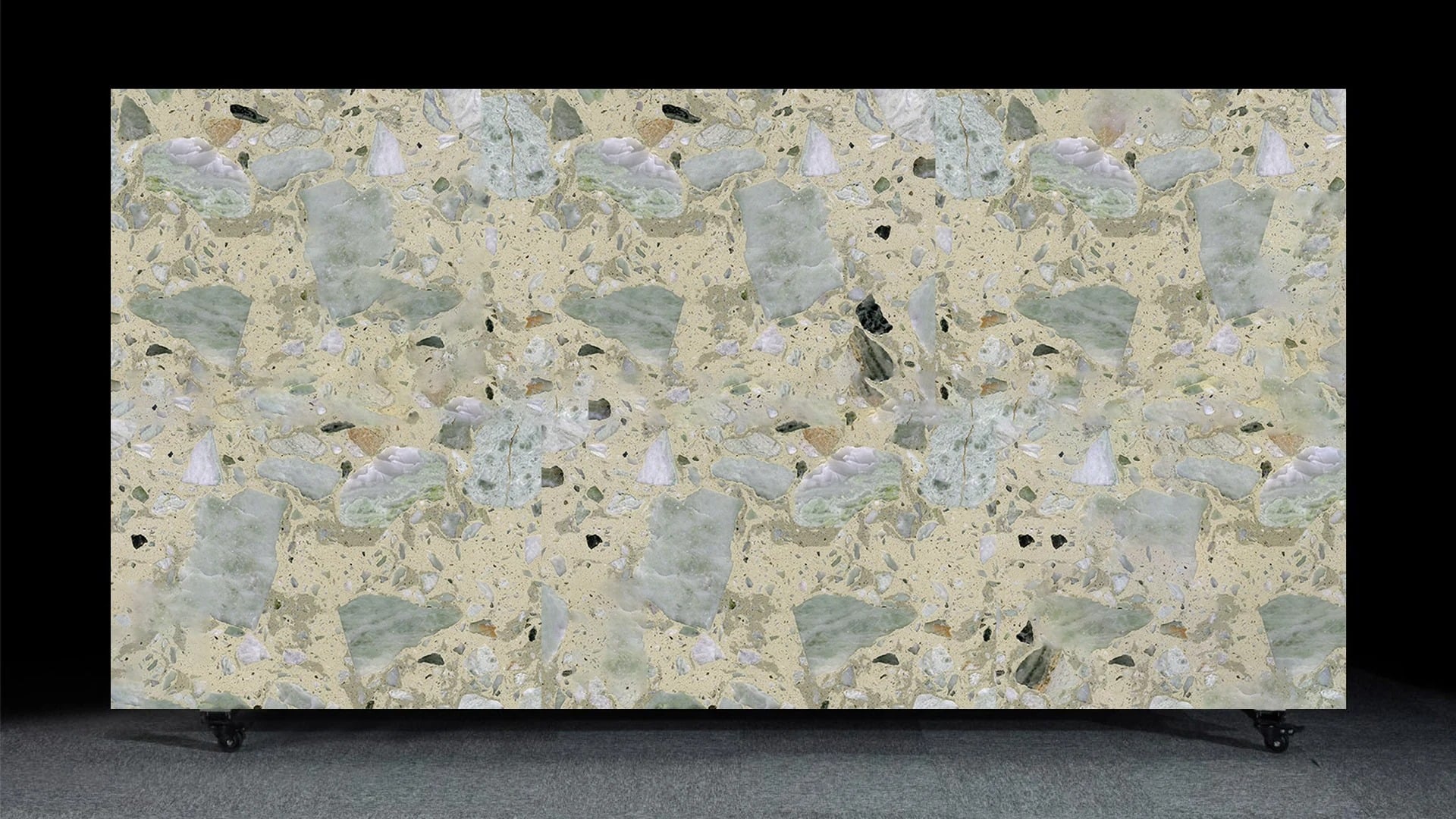
Prefabricated terrazzo, manufactured and finished at the factory before shipment, is cut to standard or custom slab and tile formats and installed similarly to natural stone or large-format tile. Prefabricated terrazzo significantly shortens on-site installation time, offers more predictable quality control since finishing happens under factory conditions rather than on a job site, and is generally the more practical terrazzo format for international commercial buyers sourcing terrazzo from an overseas manufacturer. Slab thickness, format size, and finish type should all be confirmed against the specific project's substrate before a terrazzo installation begins.
Commercial buyers evaluating terrazzo against other flooring options should look past the upfront material cost to terrazzo's lifecycle performance. Terrazzo's long service life and minimal maintenance requirements, typically limited to routine cleaning and periodic sealing depending on the binder type, often result in a lower total cost of ownership for terrazzo over a 15 to 20 year building lifecycle compared to flooring materials that require more frequent replacement.
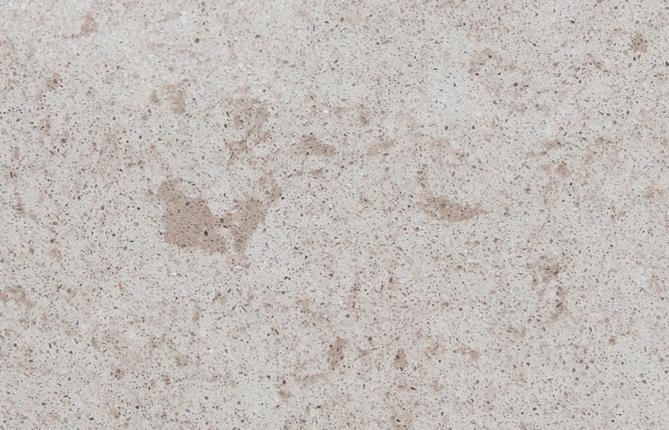
Resin-based terrazzo generally offers better resistance to staining and moisture than cement-based terrazzo, making resin terrazzo a common choice for healthcare, food service, and other spaces with strict hygiene requirements. Cement-based terrazzo, by contrast, is often selected for large outdoor or heavy-industrial applications where its higher compressive strength and lower material cost outweigh resin terrazzo's stain resistance advantages. Confirming which terrazzo binder type suits the project's specific traffic level, exposure to moisture or chemicals, and maintenance program is one of the more consequential decisions in a terrazzo specification.
Architects should request slip resistance ratings, compressive and flexural strength data, and any relevant fire or VOC emissions certifications applicable to the project's jurisdiction before finalizing a terrazzo specification. These figures vary by terrazzo aggregate composition and binder type, so documentation should correspond to the exact terrazzo product being specified rather than a general terrazzo category.
Because terrazzo's appearance depends on aggregate distribution, a physical terrazzo sample approved early in the process should be matched against production batches before a large-scale terrazzo order ships. Buyers sourcing terrazzo for a project with multiple phases or future expansion should also confirm how the manufacturer maintains terrazzo color and aggregate consistency across separate production runs, since a mismatch between an initial terrazzo installation and a later addition is difficult to correct after the fact.
Prefabricated terrazzo shipped internationally involves production lead time, shipping transit time, and on-site installation scheduling that should be mapped against the overall project timeline well before the terrazzo finishing trades begin work. Buyers should confirm terrazzo production capacity and current lead times directly with the manufacturer, particularly for large-format commercial projects that require substantial total terrazzo square footage delivered within a defined installation window.
Terrazzo's combination of durability, design flexibility, and long-term value makes it a practical terrazzo fit across several commercial building types. Retail environments benefit from terrazzo's ability to carry a custom aggregate blend that reinforces a brand's visual identity across multiple store locations. Hospitality properties often specify terrazzo for lobbies and public circulation areas where a distinctive, durable terrazzo floor finish supports the overall design concept. Healthcare and educational facilities favor terrazzo, particularly resin-based terrazzo formulations, for its combination of hygiene performance and long service life under continuous foot traffic. Transit and institutional buildings, where terrazzo flooring needs to perform reliably for decades with minimal disruption for replacement, remain some of terrazzo's most established commercial application areas.
RUNPIN manufactures terrazzo as one of its three core engineered stone product lines, alongside quartz and marble, giving commercial buyers and architects a single terrazzo manufacturing partner across multiple material categories for projects that combine different finishes.
RUNPIN's terrazzo slabs are manufactured and finished under factory conditions, giving buyers consistent dimensional accuracy, surface finish, and aggregate distribution across terrazzo production runs compared to variability that can occur with on-site terrazzo pours.
RUNPIN offers terrazzo in a range of aggregate compositions, colors, and slab formats, with the ability to develop custom terrazzo aggregate blends and finishes for architects and distributors working on branded or project-specific commercial terrazzo specifications.
RUNPIN's terrazzo has been supplied for commercial projects spanning retail, hospitality, and institutional applications, where consistent factory finishing and custom terrazzo color development support large-scale specification across multiple locations.
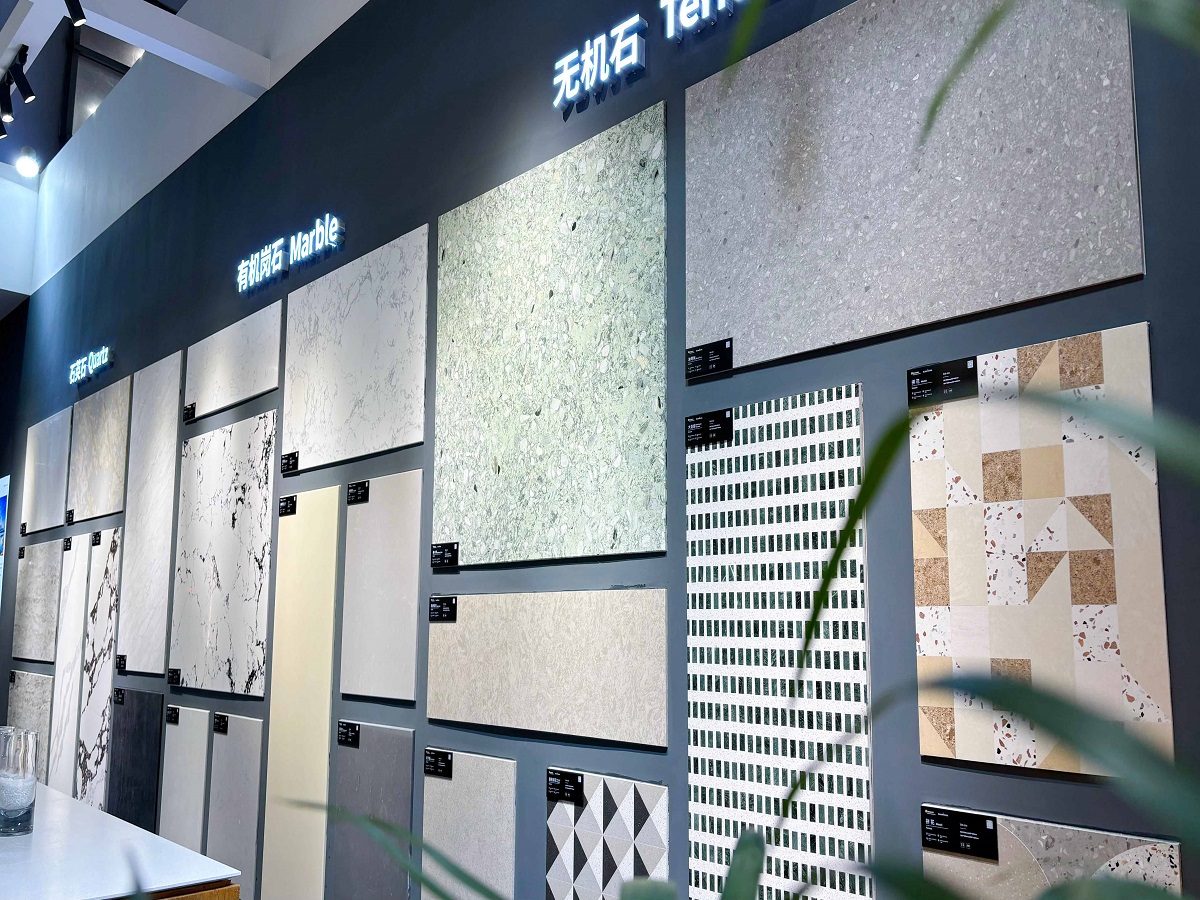
RUNPIN supports terrazzo production with a team of more than 30 R&D professionals working alongside five production bases, with a combined annual engineered stone production capacity of 26.1 million square meters, capacity that gives commercial buyers confidence that a custom terrazzo development project can also be fulfilled at the volumes larger commercial terrazzo specifications require.
Choosing terrazzo for a commercial project involves more than selecting a terrazzo color and moving forward. Aggregate composition, binder type, format, and supplier capability all shape how a finished terrazzo floor performs over the life of the building and how smoothly the terrazzo specification and procurement process unfolds. Architects and buyers who confirm these terrazzo details early, and work with a manufacturer that can document terrazzo performance data and maintain consistency across production runs, are far better positioned to specify terrazzo that meets both the design intent and the practical demands of a commercial project.
Contact RUNPIN to discuss terrazzo specifications, aggregate and color options, and production capacity for your next commercial terrazzo project.